





 (1)-54x54.jpg)


TCL Solar E Class: The Complete UK Installer’s Guide
The TCL Solar E Class represents a new generation of premium residential solar panels now available to UK installers through Bimble Solar.
Combining back contact cell technology with bifacial energy generation, these MCS-approved panels deliver between 440W and 470W (HSM-BD54-DA model) with efficiency ratings up to 23.5%.
Backed by the financial strength of TCL Group – a Fortune Global 500 company with over $42 billion in annual revenue – and carrying Bloomberg NEF Tier 1 status, the E Class offers UK installers a compelling option for homeowners seeking high-performance panels with industry-leading warranty coverage.
This guide covers everything you need to know about specifying, sourcing, and installing TCL Solar E Class panels in the UK market.
Table of Contents
- What Is TCL Solar E Class?
- Who Makes TCL Solar Panels?
- Back Contact Technology Explained
- TCL E Class Technical Specifications
- Warranty and Certifications
- Installation Considerations
- Why Buy TCL E Class from Bimble Solar?
- Frequently Asked Questions
- Next Steps
What Is TCL Solar E Class?
The E Class HSM-BD54-DA sits at the heart of TCL Solar’s residential product range, positioned as a premium offering that combines aesthetic appeal with advanced cell technology.
Unlike conventional panels that use visible busbars across the cell surface, E Class panels employ back contact architecture – placing all electrical connections on the rear of each cell.
The result is a sleek, all-black appearance that many homeowners prefer, particularly on properties where visual impact matters.
Within the broader TCL Solar portfolio, the E Class complements the S Class (TOPCon shingled cells) and T Class (TOPCon half-cells) ranges. Where the S and T Class panels prioritise value, the E Class targets the premium residential segment with its back contact technology and glass-glass construction.
E Class Product Range
The E Class residential range comprises the HSM-BD54-DA series: 54-cell modules available in seven power variants:
|
Model |
Power Output |
Efficiency |
|
HSM-BD54-DA470 |
470W |
23.5% |
|
HSM-BD54-DA465 |
465W |
23.3% |
|
HSM-BD54-DA460 |
460W |
23.1% |
|
HSM-BD54-DA455 |
455W |
22.8% |
|
HSM-BD54-DA450 |
450W |
22.6% |
|
HSM-BD54-DA445 |
445W |
22.3% |
|
HSM-BD54-DA440 |
440W |
22.1% |
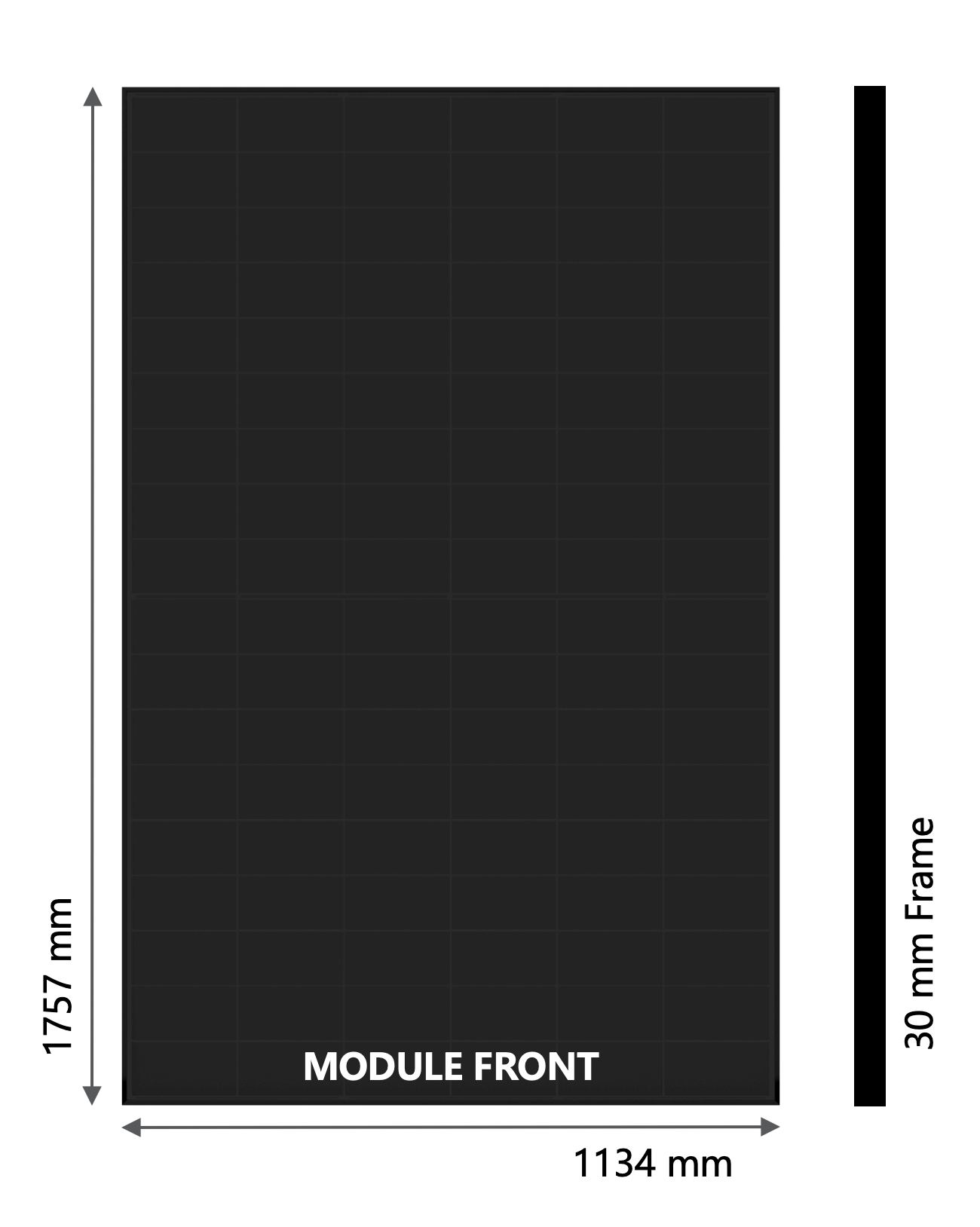
All variants share identical physical dimensions (1757mm × 1134mm × 30mm) and mounting hole positions, simplifying installation planning and allowing flexibility when matching available stock to project requirements.
At the moment, the highest-rated E Class panel available in the UK is 460W (the HSM-BD54-DA460 panel).
Key Features at a Glance
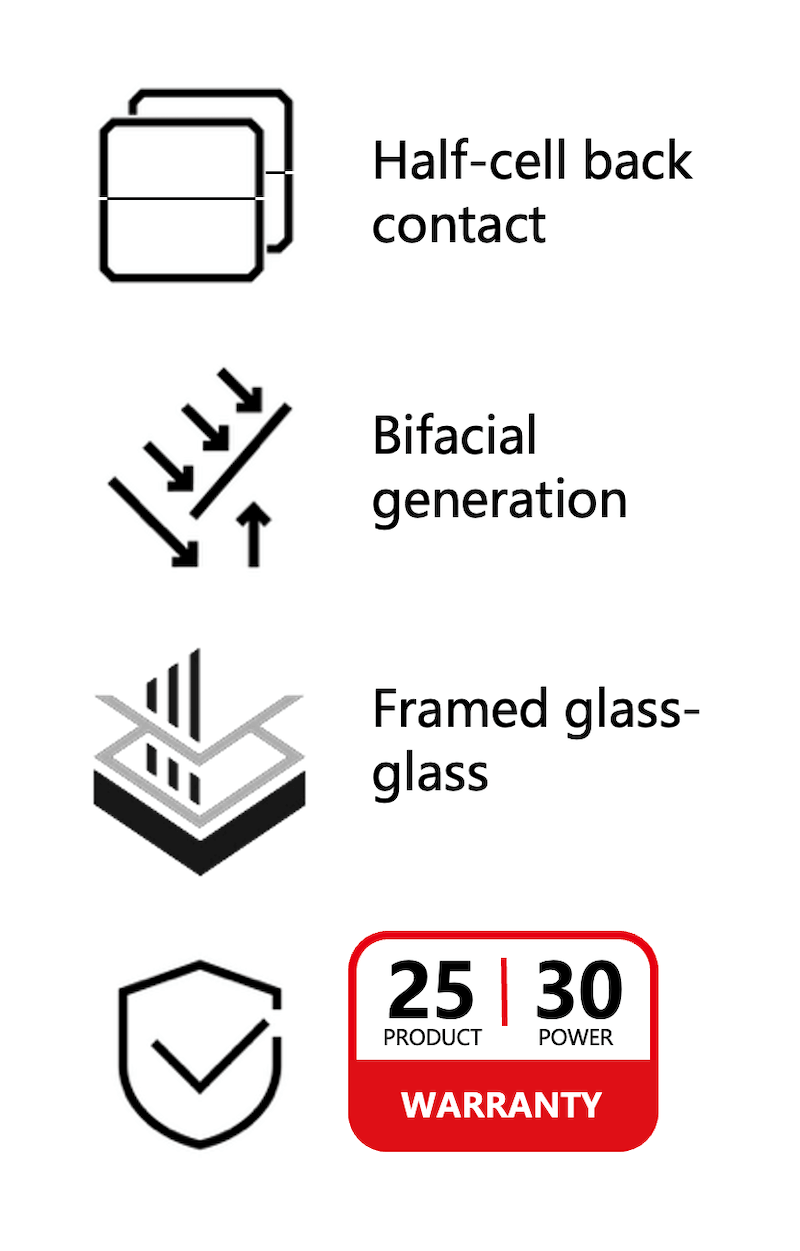
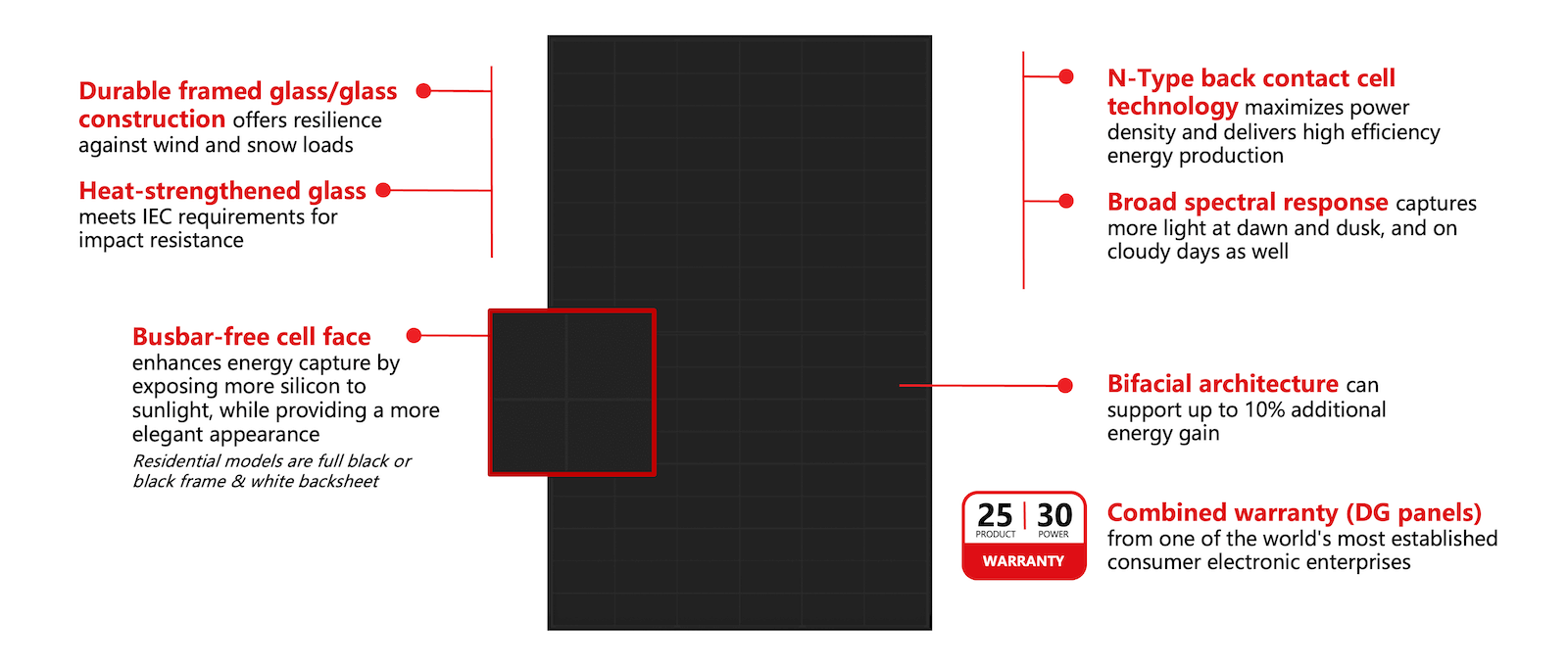
- N-type back contact solar cells with no visible busbars
- Bifacial design capturing reflected light from rear surface
- Framed glass-glass construction (2mm + 2mm heat-strengthened)
- 30mm black anodised aluminium frame
- IP68-rated junction boxes with three bypass diodes
- Stäubli MC4-EVO2A connectors with 1400mm cable length
- 25-year product warranty and 30-year performance warranty
Who Makes TCL Solar Panels?
For UK installers unfamiliar with TCL in the solar context, understanding the company’s background provides important context for the brand proposition you’re presenting to customers.
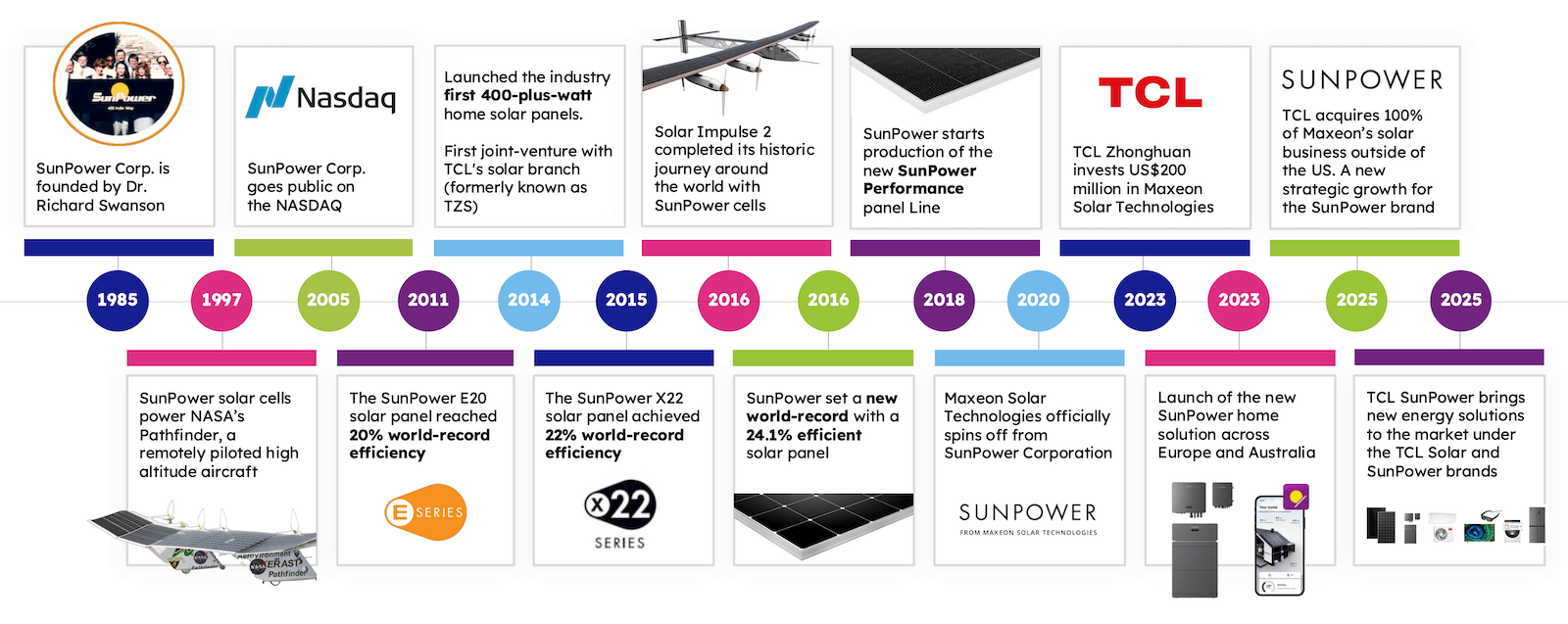
TCL Technology Group was founded in 1981 and has grown into one of the world’s largest consumer electronics manufacturers. With annual operating income exceeding $42 billion and a presence in over 170 countries, TCL ranks among the global top two for LCD display panels, TV panels, and branded televisions. The company employs over 130,000 people across 32 manufacturing facilities worldwide.
TCL’s involvement in solar extends back to 2014 through its subsidiary TCL Zhonghuan, which became one of the world’s largest producers of monocrystalline silicon wafers – the foundation material for high-efficiency solar cells. This vertical integration, controlling production from raw silicon through to finished panels, distinguishes TCL from manufacturers who rely on third-party cell suppliers.
The SunPower Connection
In late 2024, TCL Group reached agreement to acquire Maxeon Solar Technologies’ sales and marketing operations across Europe, the Middle East, Africa, Asia-Pacific, and Latin America. This transaction, completed in early 2025, brought the SunPower brand under TCL ownership outside North America and created TCL SunPower Global.
This acquisition matters because SunPower pioneered back contact cell technology – the same technology now deployed in TCL’s E Class panels. Dick Swanson, SunPower’s founder, invented the interdigitated back contact (IBC) cell architecture that eliminates front-surface metallisation. By combining SunPower’s four decades of back contact expertise with TCL’s manufacturing scale and silicon wafer production, TCL SunPower Global brings proven technology to a broader market.
Bloomberg NEF Tier 1 Status

TCL Solar achieved Bloomberg NEF Tier 1 module manufacturer status in 2025 – a designation that carries significant weight in project finance and insurance contexts. The BNEF Tier 1 list applies rigorous criteria covering technical reliability, production capacity, financial health, and documented project delivery across multiple years. For installers, this status provides confidence when discussing manufacturer credibility with customers concerned about long-term warranty backing.
Back Contact Technology Explained
Understanding back contact technology helps installers explain the E Class value proposition to customers weighing their options.
In conventional solar cells – whether older PERC designs or newer TOPCon architecture – metal busbars run across the front surface of each cell, collecting current and conducting it to the panel’s electrical terminals. While these busbars are necessary for electrical function, they create shadows on the cell surface, reducing the active area available to generate electricity. Manufacturers have progressively reduced busbar width and quantity, but some front-surface shading remains unavoidable with traditional designs.
Back contact cells take a fundamentally different approach. Both positive and negative electrodes are positioned on the rear of the cell, leaving the entire front surface unobstructed for light absorption. This design offers several practical advantages:
- Higher efficiency per unit area – more silicon exposed to sunlight means more electricity generated from the same panel footprint.
- Cleaner aesthetic – the absence of visible grid lines creates a uniform black appearance that many homeowners find more attractive.
- Reduced hot-spot risk – the cell-level bypass architecture provides better protection against localised heating.
- Lower operating temperature – improved heat dissipation contributes to better real-world performance.
Back Contact vs TOPCon: Which to Choose?
For installers offering multiple panel options, the choice between back contact E Class panels and TOPCon alternatives often comes down to project priorities.
Choose E Class back contact panels when the customer prioritises aesthetic appearance and is willing to invest in premium technology. Properties with prominent roof visibility, conservation area considerations, or design-conscious homeowners represent ideal applications. The efficiency advantage also makes E Class panels well-suited to space-constrained roofs where maximising output per square metre matters.
Choose TOPCon panels (such as TCL’s S Class or T Class ranges) when budget sensitivity outweighs aesthetic concerns, or when roof orientation and shading conditions limit the efficiency gains achievable with premium technology. TOPCon panels offer excellent price-to-performance ratios and share many of the low-degradation characteristics of N-type cell technology.
TCL E Class Technical Specifications
The following specifications apply to the HSM-BD54-DA series. We’ve focused on the data most relevant to UK installation planning and include the 460W panel currently available in the UK.
Electrical Specifications
All electrical data measured at Standard Test Conditions (1000 W/m² irradiance, AM 1.5, 25°C).
|
Parameter |
HSM-BD54-DA470 |
HSM-BD54-DA460 |
HSM-BD54-DA450 |
|
Nominal Power (Pnom) |
470W |
460W |
450W |
|
Panel Efficiency |
23.5% |
23.1% |
22.6% |
|
Rated Voltage (Vmpp) |
34.74V |
34.62V |
34.50V |
|
Rated Current (Impp) |
13.54A |
13.29A |
13.05A |
|
Open-Circuit Voltage (Voc) |
41.18V |
41.06V |
40.94V |
|
Short-Circuit Current (Isc) |
14.32A |
14.25A |
14.12A |
|
Power Binning |
+3/0% |
+3/0% |
+3/0% |
The positive-only power binning (+3/0%) means panels will meet or exceed their rated output – a detail worth highlighting to customers comparing warranty terms.
Bifacial Performance Data
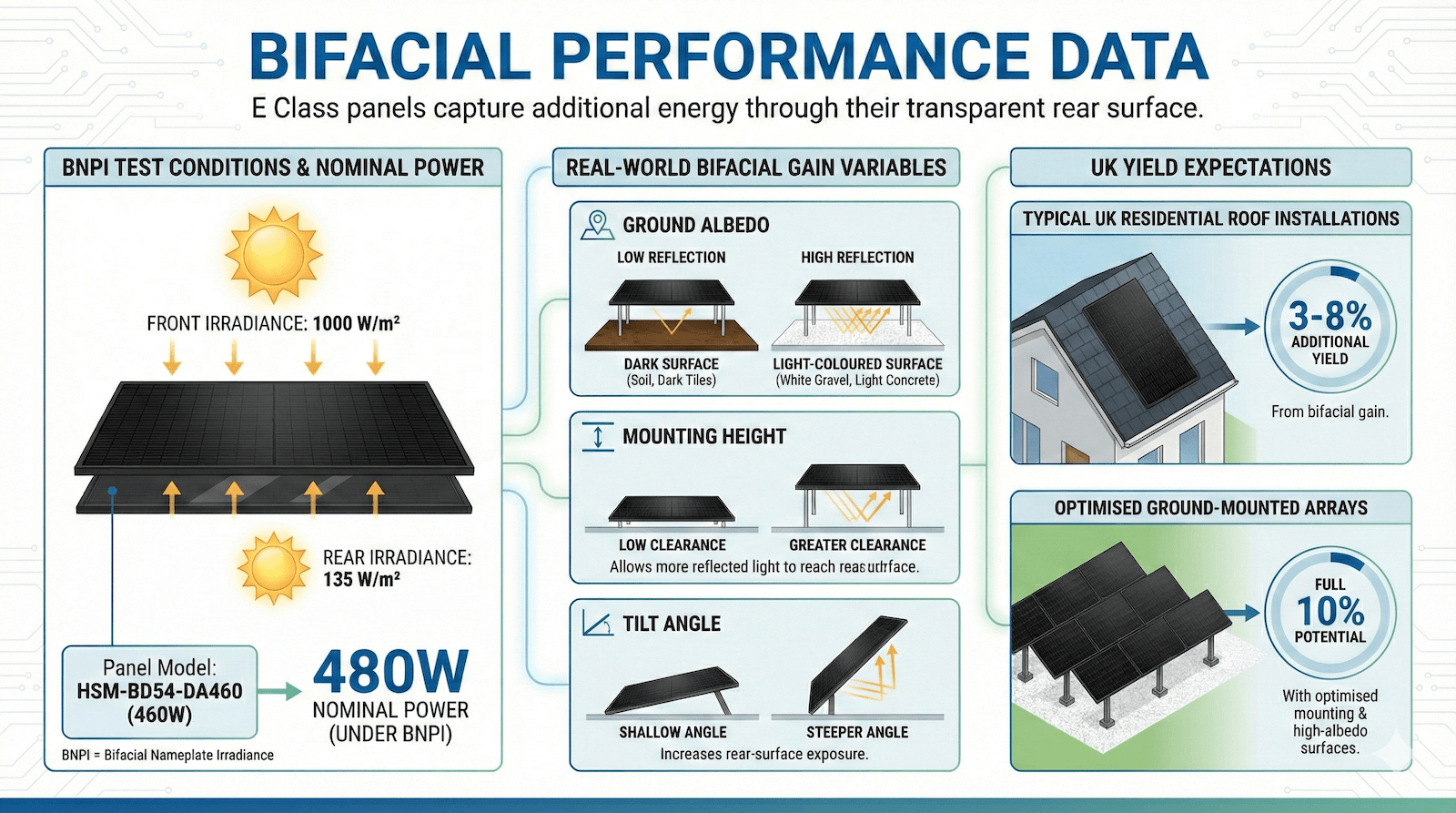
E Class panels can capture additional energy through their transparent rear surface. Under BNPI test conditions (front 1000 W/m², rear 135 W/m²), the 460W panel (HSM-BD54-DA460) delivers 480W nominal power.
Real-world bifacial gains depend on installation variables:
- Ground albedo – light-coloured surfaces (white gravel, light concrete) reflect more light than dark surfaces (soil, dark tiles).
- Mounting height – greater clearance between panels and roof/ground allows more reflected light to reach the rear surface.
- Tilt angle – steeper angles can increase rear-surface exposure to reflected light.
For typical UK residential roof installations, expect 3-8% additional yield from bifacial gain. Ground-mounted arrays with optimised mounting and high-albedo surfaces can achieve the full 10% potential.
Mechanical Specifications
|
Parameter |
Specification |
|
Dimensions |
1757mm × 1134mm × 30mm |
|
Weight |
24.2 kg |
|
Front Glass |
2.0mm heat-strengthened, AR coating |
|
Rear Glass |
2.0mm heat-strengthened |
|
Frame |
30mm black anodised aluminium alloy |
|
Junction Box |
IP-68 rated, 3 bypass diodes |
|
Connectors |
Stäubli MC4-EVO2A |
|
Cable Length |
1400mm (±15mm) |
Load and Environmental Ratings
|
Parameter |
Rating |
|
Wind Load |
2400 Pa (245 kg/m²) front and back |
|
Snow Load |
5400 Pa (550 kg/m²) front |
|
Hail Resistance |
25mm diameter at 23 m/s |
|
Operating Temperature |
−40°C to +70°C |
|
Maximum System Voltage |
1500V IEC |
The 5400 Pa snow load rating exceeds requirements for virtually all UK installations, providing comfortable margin even in areas prone to heavy snowfall.
Performance in UK Conditions
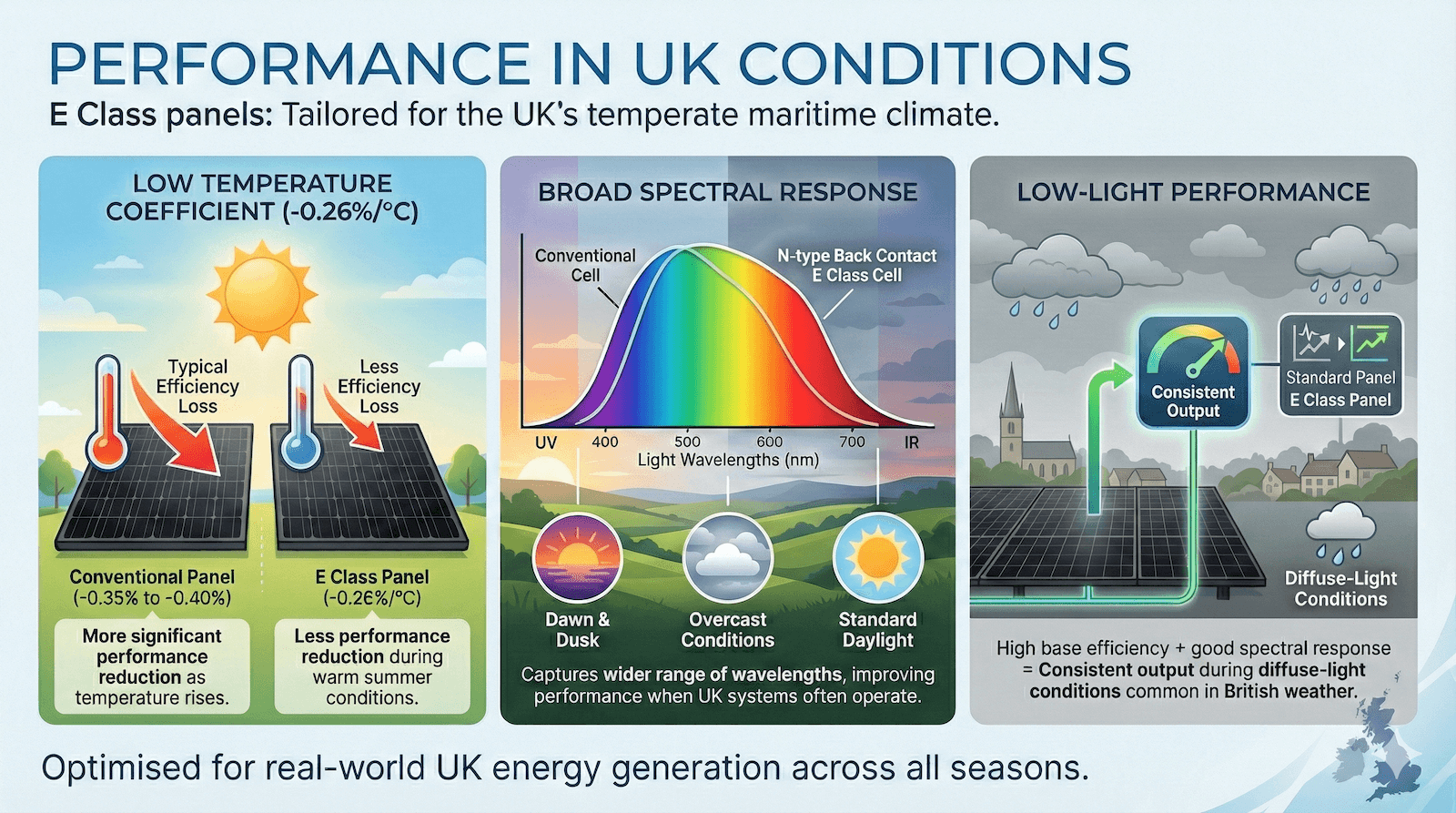
Several E Class characteristics suit the UK’s temperate maritime climate:
- Low temperature coefficient (−0.26%/°C): Solar panels lose efficiency as cell temperature rises above the 25°C test standard. The E Class’s low temperature coefficient means less performance reduction during warm summer conditions compared to panels with typical −0.35% to −0.40% coefficients.
- Broad spectral response: N-type back contact cells capture a wider range of light wavelengths than conventional cells, improving performance during dawn, dusk, and overcast conditions – precisely when UK systems often operate.
- Low-light performance: The combination of high base efficiency and good spectral response delivers consistent output during the diffuse-light conditions common in British weather.
Warranty and Certifications
TCL Solar E Class panels carry one of the strongest warranty packages available in the UK residential market.
Understanding the 30-Year Performance Warranty
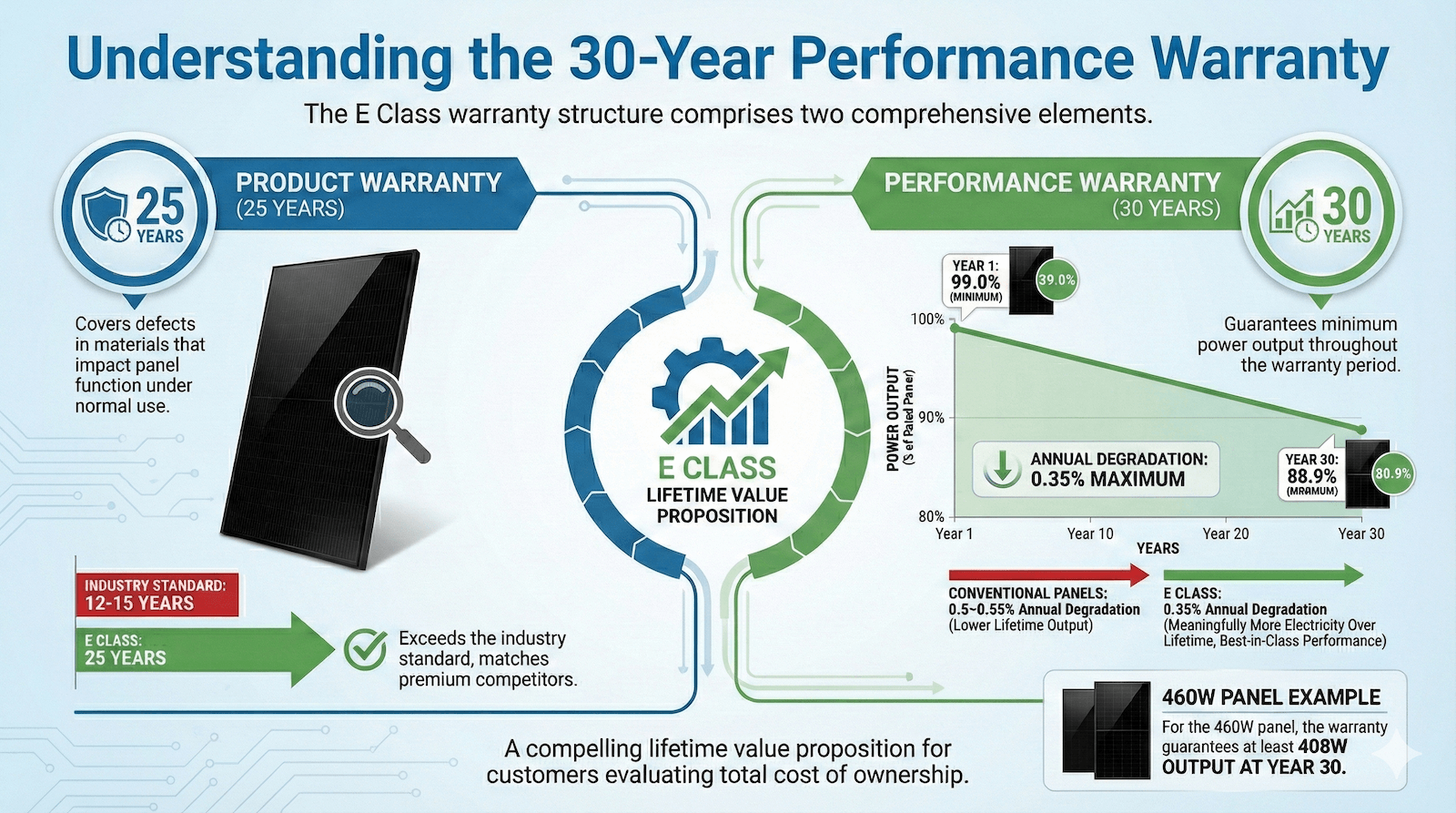
The E Class warranty structure comprises two elements:
Product warranty (25 years): Covers defects in materials that impact panel function under normal use. This exceeds the industry standard of 12-15 years and matches premium competitors.
Performance warranty (30 years): Guarantees minimum power output throughout the warranty period:
- Year 1: 99.0% of rated power minimum
- Annual degradation: 0.35% maximum
- Year 30: 88.9% of rated power minimum
The 0.35% annual degradation rate represents best-in-class performance. Many conventional panels specify 0.5-0.55% annual degradation, meaning the E Class will produce meaningfully more electricity over its lifetime compared to standard alternatives.
For the 460W panel, the warranty guarantees at least 408W output at year 30 – a compelling lifetime value proposition for customers evaluating total cost of ownership.
Warranty Claims Process
Warranty claims should be directed through the distributing partner (Bimble Solar for UK purchases). TCL will, at their discretion, repair, replace, or refund covered panels. Replacement panels will be electrically and mechanically compatible with the original installation.
Certifications
|
Certification |
Standard/Rating |
|
Performance Testing |
IEC 61215 |
|
Safety Testing |
IEC 61730 |
|
Fire Rating |
Class A (IEC 61730-2 / UL 790) |
|
Protection Class |
Class II (IEC 61140) |
|
Quality Management |
ISO 9001:2015 |
|
Environmental Management |
ISO 14001:2015 |
|
Health & Safety |
ISO 45001:2018 |
|
Energy Management |
ISO 50001:2018 |
MCS Certification
TCL Solar E Class panels hold MCS (Microgeneration Certification Scheme) approval, confirming eligibility for:
- Smart Export Guarantee (SEG) payments for exported electricity
- Building Regulations compliance for domestic installations
- DNO notification under G98/G99 frameworks
MCS certification should be verified against the current MCS product database when specifying systems.
Installation Considerations
The following guidance addresses practical questions commonly raised by installers new to the E Class range.
String Sizing and Inverter Compatibility
With open-circuit voltages around 41V and a 1500V maximum system voltage rating, the HSM-BD54-DA series supports long strings typical of UK residential installations:
- Maximum theoretical string length: 30-32 panels (after cold-temperature Voc correction)
- Practical UK residential strings: 10-15 panels typical
The E Class is compatible with string, hybrid, optimiser, and microinverter systems from major manufacturers.
When using optimisers or microinverters, confirm input current limits against the module’s 14.25 A Isc (460W panel), which is typical for high-power modern modules.
Mounting and Handling
At 24.2 kg, E Class panels sit at the heavier end of the residential range due to their glass-glass construction. Two-person handling is recommended, particularly when working at height or in windy conditions.
Standard mounting clamps compatible with 30mm frames are required. The panel’s 2400 Pa wind load rating accommodates typical UK roof installations without requiring additional structural assessment in most cases.
Cable Management
The 1400mm factory-fitted cables with MC4-EVO2A connectors provide adequate length for most residential installations. The three-junction-box design positions cable exits centrally along the panel’s long edge, allowing neat routing in landscape or portrait orientation.
Why Buy TCL E Class from Bimble Solar?

Bimble Solar has established itself as a trusted UK distributor for installers seeking quality products with reliable service. Our TCL Solar E Class stock offers:
- UK-held inventory for rapid delivery
- Trade account pricing for registered installers
- Technical support from our experienced team
- Straightforward warranty support through our UK operation
- Complementary products including mounting systems, inverters, and batteries
We’ve worked with TCL SunPower Global to ensure UK installers have access to full technical documentation, specification sheets, and installation guidance in English.
Frequently Asked Questions
Are TCL Solar panels any good?
Yes. TCL Solar panels are manufactured by a Bloomberg NEF Tier 1 company backed by the financial strength of TCL Group – a Fortune Global 500 company with over $42 billion in annual revenue. The E Class range uses proven back contact cell technology developed through TCL’s partnership with SunPower, and carries one of the longest warranty terms available in the UK market (25-year product, 30-year performance). Independent testing confirms specifications, and the panels hold all relevant certifications for UK installation.
Is TCL Solar the same as SunPower?
TCL SunPower Global operates both the TCL Solar and SunPower brands following TCL’s acquisition of Maxeon Solar Technologies’ EMEA operations in early 2025. In the UK market, you’ll find both TCL-branded panels (including the E Class) and SunPower-branded panels available through the same distribution network. The back contact technology used in TCL E Class panels derives from SunPower’s pioneering interdigitated back contact cell architecture.
What warranty do TCL E Class panels have?
TCL E Class panels carry a 25-year product warranty covering defects in materials, plus a 30-year performance warranty guaranteeing at least 88.9% of rated power output at year 30. The 0.35% maximum annual degradation rate exceeds typical industry standards of 0.5% or higher, meaning E Class panels will produce more electricity over their lifetime compared to many alternatives.
Are TCL Solar panels MCS approved?
Yes, TCL Solar E Class panels hold MCS certification, making them eligible for Smart Export Guarantee (SEG) payments and compliant with UK Building Regulations requirements for domestic solar installations.
What is the difference between TCL E Class and S Class?
The E Class uses back contact cell technology with all electrical connections on the rear of each cell, producing higher efficiency (up to 23.5%) and a clean all-black appearance with no visible busbars. The S Class uses TOPCon shingled cell technology, offering strong performance at a more accessible price point. Both use N-type cells and glass-glass construction with similar warranty terms.
How do TCL E Class panels perform in cloudy conditions?
The N-type back contact cells in E Class panels offer broad spectral response, capturing a wider range of light wavelengths than conventional cells. This translates to better performance during diffuse-light conditions common in UK weather – dawn, dusk, and overcast days. The low temperature coefficient (−0.26%/°C) also means less efficiency loss during the limited hot weather the UK experiences.
Can TCL E Class panels be used with any inverter?
TCL E Class panels are compatible with string inverters, hybrid inverters, and microinverter/optimiser systems from all major manufacturers. The 1500V maximum system voltage and standard MC4-EVO2A connectors ensure broad compatibility. When using microinverters or optimisers, verify the unit’s current handling capacity accommodates the panel’s 14.25A short-circuit current (for the HSM-BD54-
DA460 460W panel).
Next Steps
TCL Solar E Class panels offer UK installers a compelling premium residential option: proven back contact technology, industry-leading warranties, and the backing of a financially robust Tier 1 manufacturer. For homeowners seeking high-performance panels with clean aesthetics and long-term reliability, the E Class makes a strong case.
To discuss trade pricing, check current stock availability, register for a trade account, or arrange delivery, contact Bimble Solar's trade team. We’re here to support your projects from specification through to installation.